

Did you know that students spend an average of $700 to $1,000 every year on textbooks? With the rapid rise of technology, the way we approach education has changed dramatically. Traditional textbooks are no longer the only option. Instead, interactive tools and platforms are reshaping how students engage with content.
In the late 1990s, there was only one computer for every five students. Today, the adoption of technology in education has skyrocketed. The pandemic alone drove a 300% increase in the use of digital tools. These resources are not just convenient—they’re cost-effective and tailored to modern needs.
By 2025, 25% of K-12 students are expected to be English Language Learners (ELLs). This shift highlights the growing demand for adaptable and inclusive educational solutions. Platforms like Khan Academy, Quizlet, and MOOCs are leading the way, offering features like searchable content, hyperlinks, and flashcards that traditional textbooks simply can’t match.
At BibliU, we’re committed to making education more accessible. Our platform costs just $35 per student per class, saving schools and students money while enhancing engagement. The future of education is here—are you ready to embrace it?
Key Takeaways
- Students spend $700-$1,000 annually on textbooks, making digital alternatives a cost-effective solution.
- Technology adoption in education has surged, with a 300% increase during the pandemic.
- By 2025, 25% of K-12 students will be English Language Learners, emphasizing the need for adaptable tools.
- Digital platforms offer features like searchable content and flashcards, enhancing the learning experience.
- BibliU provides an affordable solution at $35 per student per class, saving money while improving engagement.
Introduction to Digital Learning Resources
The way students access knowledge has transformed dramatically over the years. From the mass production of textbooks in the 1820s to the introduction of computers in classrooms in the 1970s, education has continually adapted to new tools and methods. Today, technology plays a central role in shaping how students learn and interact with content.
What Are Digital Learning Resources?
Digital learning resources (DLRs) refer to apps, software, and platforms designed to support educational objectives. These tools range from interactive textbooks to AI-powered tutors, offering features like searchable content, multimedia integration, and personalized learning paths. Unlike traditional materials, DLRs are dynamic, adaptable, and often more engaging for students.
The Evolution of Digital Learning in Education
The journey of educational tools began with radio lectures in the early 20th century, evolving into Zoom classes and AI tutors today. The COVID-19 pandemic accelerated this shift, with 98% of U.S. institutions implementing emergency remote teaching. This period also saw a 74% increase in MOOC enrollment, highlighting the growing reliance on digital platforms.
Christensen’s research on computer-enhanced instruction underscores the potential of these tools to transform education. Similarly, Li’s distinction between “digital supplements” and “primary content” eras reflects the changing role of technology in classrooms. Today, states like New York allocate significant budgets, such as $89 million, to support EdTech initiatives.
| Year | Milestone | Impact |
|---|---|---|
| 1820s | Mass textbook production | Standardized education materials |
| 1970s | Introduction of classroom computers | Began the integration of technology in education |
| 2020 | COVID-19 remote learning mandates | Accelerated adoption of digital tools |
As education continues to evolve, digital learning resources are becoming essential for meeting the diverse needs of students. Whether through synchronous Zoom classes or asynchronous MOOCs, these tools are reshaping the future of education.
Types of Digital Learning Resources
Education today is powered by a variety of innovative tools designed to enhance the student experience. These tools cater to different needs, from interactive textbooks to open-access platforms. Let’s explore the main categories that are reshaping how students engage with content.
Interactive Digital Textbooks
Interactive textbooks go beyond static pages. They include features like in-chapter quizzes, multimedia elements, and real-time feedback. For example, McGraw-Hill Connect offers quizzes that help students test their understanding as they read. These tools make studying more engaging and effective.
Open Educational Resources (OER)
OER are freely accessible materials that reduce costs for students. Platforms like OpenStax provide over 60 free college textbooks, while MIT OpenCourseWare offers full courses online. Adopting OER can save students up to $93 per course, as seen with Maricopa College’s $9.6 million in savings.
Educational Apps and Software
Apps like Duolingo and Photomath are transforming how students learn languages and solve math problems. Duolingo, with 25 million monthly users, makes language learning fun and accessible. Photomath uses AI to help students understand complex problems step by step.
Online Courses and MOOCs
Massive Open Online Courses (MOOCs) offer flexible learning options. Platforms like Coursera host over 5,400 courses, with an 86% completion rate for guided projects. FutureLearn’s microcredentials provide specialized skills, making education more tailored to career goals.
These tools are not just alternatives to traditional methods—they are enhancements. By leveraging these platforms, students gain access to materials that are interactive, cost-effective, and tailored to their needs.
Benefits of Digital Learning Resources
Modern education is evolving with tools that make studying more flexible and affordable. These platforms are designed to meet the diverse needs of students, offering features that enhance their success. From cost savings to improved engagement, the advantages are clear.
Flexibility and Accessibility
One of the biggest benefits is 24/7 access to materials. Platforms like Pearson’s Revel show that students often study outside traditional hours. This flexibility helps them balance education with other responsibilities.
Additionally, 89% of LMS platforms now include text-to-speech features, ensuring accessibility for all learners. Tools like McGraw-Hill’s ReadAnywhere app even allow offline access, making studying possible anywhere.
Cost-Effectiveness for Students
Traditional textbooks can cost up to $400, while e-textbooks average just $120. Platforms like BibliU reduce costs further, offering access for $35 per student per class. This affordability is crucial, especially with the textbook affordability crisis highlighted by ACSFA.
Case studies, such as Maricopa College’s $9.6 million savings with OER, prove the financial impact of these tools. Students can focus on their education without the burden of high costs.
Enhanced Engagement and Interactivity
Interactive content boosts retention by 34%. Tools like Quizlet use spaced repetition to improve test scores, while adaptive learning platforms, such as those used at UCF, have led to a 22% grade improvement.
BibliU’s 92% day-one access rate ensures students start strong, compared to traditional 3-week delays. These tools create engaging experiences that keep students motivated and on track.
Modern educational tools are transforming how students learn, offering flexibility, affordability, and engagement. By embracing these platforms, students can achieve greater success in their academic journeys.
Challenges of Digital Learning Resources
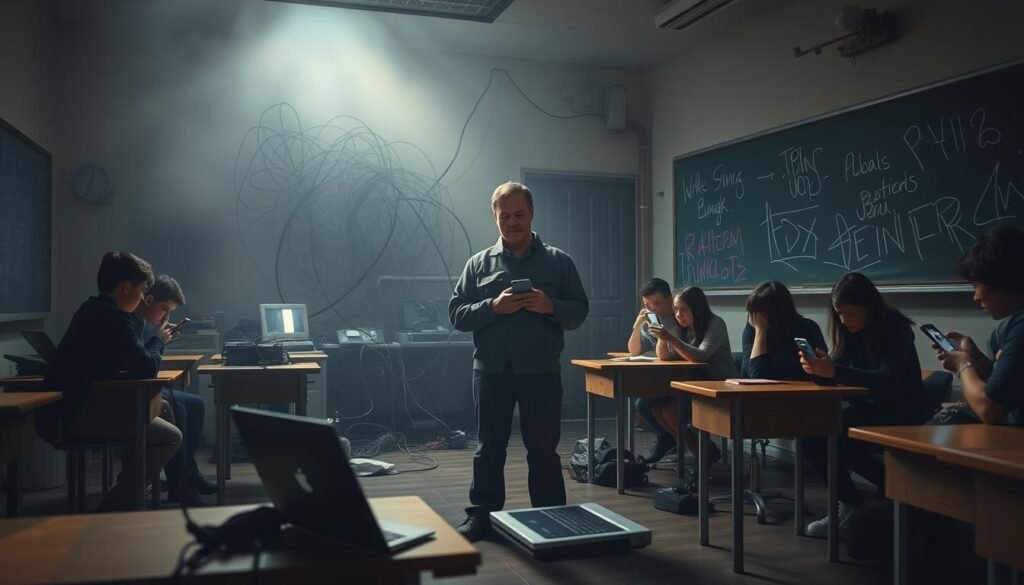
While technology has revolutionized education, it also brings unique challenges that need addressing. From technical issues to concerns about academic integrity, these hurdles can impact both students and educators. Understanding these challenges is key to creating effective solutions.
Technical Issues and Accessibility
One major challenge is the digital divide. According to the FCC, over 21 million Americans lack reliable broadband access. This gap affects students in rural and low-income areas, limiting their ability to participate fully in tech-driven classrooms.
Device dependency is another issue. For example, Chromebooks, while popular, have a battery life of just 12.5 hours. This can disrupt learning for students who rely on these devices for extended periods.
Accessibility gaps also persist. A study found that 37% of Open Educational Resources (OER) fail to meet WCAG 2.1 standards, making them difficult for students with disabilities to use.
Over-Reliance on Technology
Excessive dependence on tech tools can lead to burnout. Stanford’s 2021 research on Zoom fatigue highlighted the cognitive load of virtual meetings. Students and educators alike report feeling drained after prolonged screen time.
LMS downtime is another concern. While platforms like Canvas boast a 99.9% uptime, others like Blackboard have faced outages, disrupting learning schedules.
Case studies, such as the University of Arizona’s dual-mode teaching model, reveal that balancing in-person and online instruction can lead to educator burnout.
Maintaining Academic Integrity
Cheating remains a significant issue in tech-driven classrooms. A survey found that 58% of undergraduates admit to digital cheating. This has led to the rise of proctoring tools like Respondus Monitor and Honorlock.
Turnitin’s AI writing detection capabilities are helping educators identify plagiarism. However, these tools are not foolproof and require constant updates to stay effective.
As one educator noted,
“The challenge isn’t just detecting cheating—it’s fostering a culture of honesty in virtual classrooms.”
| Challenge | Impact | Solution |
|---|---|---|
| Digital Divide | Limited access for rural and low-income students | NYSED’s emergency connectivity fund |
| Device Dependency | Battery life limitations disrupt learning | Invest in longer-lasting devices |
| Academic Integrity | 58% of undergraduates admit to cheating | Proctoring tools and AI detection |
Addressing these challenges requires collaboration between educators, policymakers, and tech developers. By tackling these issues head-on, we can create a more inclusive and effective educational environment.
Digital Learning Resources in Traditional Classrooms
Classrooms across the U.S. are embracing new tools to enhance teaching and student engagement. These technologies are not replacing traditional methods but are supplementing them to create richer experiences for both educators and learners.
Supplementing Traditional Teaching Methods
Many educators are integrating tools like SMART Boards, which are now used in 78% of U.S. classrooms. These interactive whiteboards make lessons more dynamic and engaging. For example, teachers can display multimedia content or use real-time polling tools like Poll Everywhere to assess student understanding instantly.
Another popular approach is the flipped classroom model. Platforms like Khan Academy are helping students prepare for lessons at home, allowing classroom time to focus on discussions and problem-solving. Studies show this method can improve test scores by up to 12%.
Blended Learning Approaches
Blended learning combines traditional classroom instruction with online materials. For instance, 92% of schools use platforms like Google Classroom or Canvas to manage assignments and communication. These tools streamline workflows and provide students with 24/7 access to programs and resources.
Augmented Reality (AR) tools, such as Merge Cube’s anatomy simulations, are also gaining traction. These immersive experiences make complex subjects like STEM more accessible and engaging. Additionally, 3D printing is being integrated into curricula, allowing students to bring their ideas to life.
Case studies, like Rocketship Education’s hybrid model, demonstrate the effectiveness of blended learning. By combining in-person and online instruction, schools can cater to diverse learning styles and needs.
Finally, professional development is crucial. With 57% of districts mandating edtech training, educators are better equipped to leverage these tools effectively. Programs like NYSED’s Blended Learning Grant are supporting schools in adopting these innovative approaches.
Digital Learning Resources in Online Education
Online education has become a cornerstone of modern academic success, offering flexibility and innovative tools for students and educators alike. With 63% of online students preferring asynchronous formats and platforms like Zoom hosting 300 million daily participants, the demand for effective virtual solutions is higher than ever.
Synchronous vs. Asynchronous Learning
Synchronous learning involves real-time interaction, such as live classes or webinars. Tools like Zoom and Adobe Connect are popular for their webinar analytics and live session capabilities. For example, Southern New Hampshire University (SNHU) uses live MBA sessions to foster engagement and collaboration.
Asynchronous learning, on the other hand, allows students to access materials at their own pace. Platforms like VoiceThread enable discussions and feedback without the need for real-time participation. This flexibility is ideal for students balancing education with other responsibilities.
Tools for Virtual Classrooms
Virtual classrooms rely on a variety of tools to ensure seamless access and success. Learning Management Systems (LMS) like Canvas, Moodle, and D2L dominate the market, with Canvas holding a 35% share. These platforms streamline course management and provide essential features like assignment tracking and communication tools.
For exam integrity, Proctorio boasts an 87% success rate in preventing cheating. Virtual lab platforms like Labster offer over 300 simulations, making complex subjects like STEM more accessible. Pearson’s Virtual Classroom toolkit further enhances the experience with interactive features tailored for educators.
| Tool | Features | Best For |
|---|---|---|
| Blackboard Collaborate Ultra | Real-time collaboration, breakout rooms | Synchronous learning |
| Panopto Lecture Capture | Recording, playback, searchable content | Asynchronous learning |
These tools and technologies are transforming how students engage with online courses. By leveraging the right platforms, educators can create dynamic and inclusive programs that cater to diverse learning needs.
How Digital Learning Resources Support Diverse Learners
Education today is about inclusivity, and tools are making it possible for every student to thrive. From neurodiverse learners to English Language Learners (ELLs), innovative technologies are breaking down barriers and creating equal opportunities for success.
Supporting Neurodiverse Students
Neurodiverse students often face unique challenges in traditional classrooms. Tools like Texthelp’s Read&Write literacy software and Microsoft Immersive Reader are transforming their learning experiences. These platforms offer features like text-to-speech, word prediction, and visual aids, making content more accessible.
For example, Desmos’ audio-tactile graphing features help students with visual impairments understand complex math concepts. Similarly, Dragon NaturallySpeaking’s speech-to-text functionality supports students with dyslexia or motor skill challenges. These tools empower students to engage with material in ways that suit their needs.
According to recent data, 87% of institutions now use closed captioning to support neurodiverse learners. This ensures that video content is accessible to students with hearing impairments or auditory processing disorders.
Multilingual and ELL Support
With 65% of ELLs preferring visual aids, tools like Rosetta Stone Enterprise and Flipgrid’s video response accommodations are making a significant impact. These platforms provide interactive and engaging ways for students to practice language skills.
Programs like NYSED’s Blueprint for ELL Success and CASLS’s LinguaFolio implementation are helping educators tailor instruction to meet the needs of multilingual students. Caption.Ed’s 99.9% accuracy in closed captioning ensures that ELLs can follow along with lectures and videos seamlessly.
Additionally, Bookshare offers over 1 million accessible titles, providing ELLs with the resources they need to succeed. These tools not only enhance language acquisition but also foster confidence and independence in students.
By leveraging these innovative tools, educators can create inclusive classrooms where every student has the opportunity to thrive. The future of education is one where diversity is celebrated, and technology plays a key role in making that vision a reality.
The Role of Technology in Modern Education
Technology has reshaped classrooms from simple chalkboards to dynamic digital spaces. Over the decades, education has evolved with tools that make lessons more interactive and accessible. Today, these advancements are not just optional—they’re essential for student success.

From Chalkboards to Digital Classrooms
The journey began with radio broadcasts in the 1920s, evolving to PLATO’s computer-based systems in the 1960s. By the 2000s, platforms like Zoom became staples, transforming how knowledge is shared. This shift wasn’t just about new tools—it was about reimagining engagement.
Key milestones include:
- Radio instruction: Early attempts at remote learning.
- PLATO: First computer-assisted lessons.
- Smartboards: Interactive whiteboards in 78% of U.S. schools.
The Impact of COVID-19 on Digital Learning
The pandemic forced 1.2 billion students online, with 98% of institutions adopting Zoom. This surge led to a 300% increase in LMS usage. The CARES Act allocated $30 billion to support this transition, ensuring schools could adapt.
“Hybrid models are here to stay, with 72% of schools retaining them post-pandemic.”
Case studies like ASU’s virtual biology labs showcase how technology bridges gaps. Meanwhile, Meta’s VR investments and UNESCO’s AI guidelines hint at a future where digital learning is even more immersive.
Top Digital Learning Resources for Students
Students today have access to a wide range of tools designed to enhance their academic journey. From SAT prep to writing assistance, these platforms cater to diverse needs and learning styles. Whether you’re looking for interactive content or cost-effective materials, there’s something for everyone.
Khan Academy and YouTube
Khan Academy serves over 18 million users monthly, offering free resources for subjects like math, science, and SAT prep. Its effectiveness is proven, with students improving their scores significantly. YouTube EDU complements this with over 50 million educational channels, providing visual and engaging content for all levels.
Quizlet and E-Textbooks
Quizlet, with 60 million active users, is a go-to platform for flashcards and study sets. It’s particularly useful for memorization and test preparation. E-textbooks from platforms like VitalSource offer inclusive access to affordable materials, reducing costs by up to 60% compared to traditional textbooks.
Learning Enablement Platforms
Platforms like BibliU and Cengage Unlimited are transforming how students engage with programs. BibliU boasts a 98% faculty satisfaction rate, while Cengage’s subscription model provides unlimited access to textbooks and study tools. These platforms ensure students have the resources they need for success.
How Educators Can Maximize Digital Learning Resources
Educators are increasingly turning to technology to enhance their teaching practices. With 73% of teachers needing professional development for edtech, it’s clear that effective implementation is key to achieving success in the classroom. By adopting the right strategies and measuring engagement, educators can ensure these tools truly benefit their students.
Strategies for Effective Implementation
To make the most of these tools, educators should focus on alignment with curriculum goals. Programs like the ISTE Certification standards and Quality Matters rubric provide frameworks for integrating technology effectively. Faculty training, such as the Apple Teacher program, equips educators with the skills needed to use these tools confidently.
Platforms like OER Commons offer curriculum-aligned content, ensuring resources meet educational standards. Additionally, adopting models like SAMR and TPACK helps educators evaluate how technology enhances lessons. These strategies ensure that teaching practices evolve alongside technological advancements.
Measuring Student Engagement and Success
Tracking student progress is essential for evaluating the impact of these tools. LMS analytics, such as Canvas Course Insights, provide real-time data on student performance. BibliU’s engagement dashboards offer insights into how students interact with courses, helping educators identify areas for improvement.
FERPA-compliant data tracking ensures student privacy while providing valuable metrics. By analyzing this data, educators can refine their teaching practices and create more engaging lessons. This approach not only enhances student success but also fosters a more dynamic learning environment.
The Future of Digital Learning Resources
The future of education is being shaped by groundbreaking advancements in technology. From AI tutors to blockchain credentials, these innovations are transforming how students and educators interact with programs. By 2027, the AI in EdTech market is projected to hit $6 billion, reflecting the growing reliance on these tools.
Trends in Educational Technology
One of the most exciting trends is the rise of AI-powered tutors. Platforms like Carnegie Learning’s MATHia are already helping students master complex subjects with personalized feedback. Blockchain technology is also making waves, with MIT issuing digital diplomas that are secure and easily verifiable.
5G-enabled AR classrooms are another game-changer. These immersive experiences allow students to explore virtual labs or historical sites from their desks. Meta’s Horizon Workrooms trials are pushing the boundaries of virtual collaboration, offering new ways for students to connect and learn.
UNESCO’s AI ethics framework ensures these advancements are used responsibly. Meanwhile, Amazon’s AWS Educate program and Microsoft’s Minecraft EDU are making technology more accessible to students worldwide.
Balancing Digital and Traditional Learning
While technology is transforming education, traditional methods still hold value. Research shows that a balanced approach yields the best results. For example, NYSED’s Emerging Tech Initiative encourages schools to integrate new tools while maintaining core teaching practices.
IBM’s quantum computing curricula and Meta’s VR investments highlight the potential of hybrid models. These programs combine the best of both worlds, offering students diverse learning experiences.
| Trend | Impact | Example |
|---|---|---|
| AI Tutors | Personalized learning paths | Carnegie Learning’s MATHia |
| Blockchain Credentials | Secure, verifiable diplomas | MIT’s digital diplomas |
| 5G-Enabled AR | Immersive classroom experiences | Meta’s Horizon Workrooms |
As we look ahead, the key lies in balancing innovation with tradition. By embracing these trends thoughtfully, educators can create classrooms that prepare students for the future while honoring proven methods.
Case Studies: Success Stories with Digital Learning Resources
From universities to classrooms, success stories highlight the power of modern educational technologies. Schools and students are achieving remarkable results, thanks to innovative programs and tools. These case studies showcase how institutions are transforming education and creating impactful experiences for learners.
Schools and Universities Leading the Way
Arizona State University (ASU) has seen a 20% boost in student retention by integrating adaptive learning tools. Their Starbucks College Achievement Plan has empowered thousands of employees to earn degrees while working. Similarly, Southern New Hampshire University (SNHU) serves over 200,000 online students, making education accessible to a global audience.
Purdue Global’s competency-based programs allow students to progress at their own pace, reducing time to graduation. Georgia Tech’s Online Master of Science in Computer Science (OMSCS) has graduated over 10,000 students, proving the scalability of online courses. These institutions are setting benchmarks for others to follow.
Student Testimonials and Outcomes
Students are thriving with these tools. Khan Academy’s video testimonials highlight how interactive lessons have improved test scores and confidence. NYU’s adoption of Open Educational Resources (OER) has led to an 87% satisfaction rate among students, reducing costs and enhancing access to materials.
Western Governors University has experienced a 120% enrollment growth, driven by its flexible and affordable programs. BibliU’s platform boasts a 92% student satisfaction rate, ensuring day-one access to course materials. These outcomes demonstrate the transformative potential of these technologies.
As one student shared,
“These tools have made learning more engaging and accessible. I feel supported every step of the way.”
How to Choose the Right Digital Learning Resources
Selecting the right educational tools can significantly impact student success and engagement. With 87% of institutions using rubrics and 92% prioritizing accessibility, it’s essential to consider various factors when making your choice. By aligning these tools with your educational goals, you can create a more effective and inclusive learning environment.
Factors to Consider
When evaluating educational tools, start by assessing their alignment with your curriculum. CAST’s UDL Guidelines and IMS Global standards compliance ensure that the tools meet accessibility and interoperability requirements. Budget analysis templates can help you determine affordability, while ADA Section 508 checklists ensure compliance with accessibility laws.
Consider using the SAMR model to evaluate how the tools enhance or transform learning. The ISTE Seal of Alignment guarantees that the tools meet rigorous educational standards. NYSED’s procurement guidelines offer valuable insights into selecting the right tools for your institution.
Aligning Resources with Educational Goals
Aligning tools with specific learning goals is crucial for maximizing their impact. As highlighted in aligning digital learning tools with specific learning, clear and rigorous goals are essential. Use learning progressions to clarify expectations and ensure that the tools support your objectives.
Data privacy is another critical factor. Ensure that the tools comply with COPPA and FERPA regulations to protect student information. SCORM compatibility guarantees that the tools integrate seamlessly with your existing systems. Finally, gather stakeholder feedback to ensure that the tools meet the needs of both educators and students.
“The right tools can transform the learning experience, making it more engaging and effective for everyone involved.”
By carefully considering these factors and aligning the tools with your educational goals, you can create a more dynamic and inclusive learning environment. The right choice of tools not only enhances student engagement but also supports educators in delivering high-quality instruction.
Conclusion
The integration of technology in education has opened new doors for students and educators alike. With the EdTech market valued at $35 billion, institutions are increasingly adopting hybrid models to enhance access and engagement. Platforms like BibliU are proving their worth, offering cost-effective solutions that improve ROI while ensuring day-one access to materials.
Looking ahead, AI-powered tutors and blockchain credentials are set to redefine how students learn. Initiatives like NYSED’s tech programs and UNESCO’s 2030 goals highlight the importance of balancing innovation with tradition. Continuous professional development remains crucial for educators to maximize these tools effectively.
As we move forward, a thoughtful approach to implementation will ensure that education remains inclusive and impactful. Explore open educational resources and conduct regular audits to stay ahead in this evolving landscape. The future of success in education lies in embracing technology while honoring proven methods.