

Can smart devices really change how we live and work? The Internet of Things (IoT) is more than tech. It’s a way to a more connected and efficient world.
The IoT is a network of devices, vehicles, and buildings with sensors and software. They can share data. This is changing many areas of life, from homes to factories.
Key Takeaways
- The IoT connects physical devices, enabling data collection and exchange.
- It has the potential to transform various industries and aspects of life.
- Smart devices play a crucial role in the IoT ecosystem.
- IoT can lead to increased efficiency and connectivity.
- The future of IoT holds much promise for innovation and growth.
The Fundamentals of the Internet of Things
The Internet of Things (IoT) changes how we use technology. It turns everyday items into smart devices. This change makes our world more connected, efficient, and automated.
Definition and Core Concepts
The Internet of Things is a network of devices, vehicles, and appliances. They have sensors, software, and connectivity to share data. IoT lets these devices talk to each other and the world around them, making things more interactive and dynamic.
Key Components of IoT Systems
IoT systems have a few main parts. There are sensors and actuators, connectivity protocols, and data processing and analytics. Sensors gather data, while actuators act on that data. Protocols help devices talk to each other, and analytics help make decisions.
| Component | Description | Example |
|---|---|---|
| Sensors | Collect environmental data | Temperature sensors |
| Actuators | Perform actions based on data | Smart thermostats |
| Connectivity Protocols | Enable device communication | Wi-Fi, Bluetooth |
How IoT Differs from Traditional Computing
IoT is different from traditional computing. It brings computing into the physical world, making it more widespread and less obvious. IoT devices often work on their own, needing little human help. They can also react to their surroundings in real-time.
The Evolution of Connected Technology
The growth of IoT comes from better sensors, wireless networks, and data analysis. Knowing how IoT evolved helps us see its importance in today’s tech world.
Historical Development
The idea of IoT has been around for years. But it really took off in the late 1990s and early 2000s. Back then, IoT was mainly used in industrial settings and supply chain management.
Current Technological Landscape
Now, IoT is all about cloud computing, edge computing, and advanced data analytics. These advancements help process data faster, reduce delays, and improve decision-making.
The Technology Powering IoT Ecosystems
The technology behind IoT is complex, with many parts working together. These parts help devices and systems talk to each other smoothly.
Sensors and Actuators
Sensors and actuators are key in IoT devices. They make automation and real-time interaction possible. Sensors pick up changes like temperature or motion and turn them into signals.
Types of Sensors in IoT Applications
IoT uses many sensors, like temperature and motion detectors. These sensors help devices understand and react to their surroundings.
Actuator Technologies and Capabilities
Actuators change electrical signals into actions, like moving motors. In IoT, they are crucial for controlling and automating tasks.
Connectivity Protocols
IoT connectivity protocols let devices talk to each other and to the cloud. These protocols differ in range, power use, and data speed.
Short-Range Communication
Protocols like Bluetooth and Wi-Fi are best for high-speed data over short distances.
Long-Range Communication
For longer distances, cellular networks and LPWAN are used in IoT.
Cloud Computing and Edge Computing
Cloud and edge computing are vital for handling IoT data. handles big data, while edge computing processes data near the source.
Centralized vs. Distributed Processing
Cloud computing is great for complex data analysis. Edge computing is better for quick, real-time tasks.
Real-time Data Processing Requirements
Many IoT tasks need data processed right away. This is crucial for things like industrial automation or smart vehicles.
The Current State of the Internet of Things
The IoT world is changing fast, with new tech and uses popping up everywhere. This change is making big waves in many industries and how companies work.
Global Market Overview
The IoT market worldwide is growing fast. This is because more people want connected devices and smart tech.
Market Size and Growth Projections
Reports say the IoT market will hit $1.1 trillion by 2025. It will grow 10.4% each year from 2020 to 2025. This growth comes from more industries using IoT, like manufacturing, healthcare, and transport.
Leading IoT Solution Providers
Some top names in IoT solutions are:
- Cisco Systems
- Microsoft
- IBM
- Amazon Web Services (AWS)
- Google Cloud
Adoption Rates Across Industries
Different industries are adopting IoT at different rates. Some are ahead, while others are catching up.
Early Adopters and Success Stories
Manufacturing and industrial sectors were quick to adopt IoT. They use it for things like predicting when machines need repairs and improving supply chains. For example, a big manufacturer used IoT to cut downtime by 30% and boost machine use by 25%.
Lagging Sectors and Barriers
Healthcare and finance have been slower to use IoT. This is because of worries about data safety and privacy. It’s important to fix these issues with strong security and follow rules to get more people using IoT.
As shown in the table below, different industries have different adoption rates and growth plans.
| Industry | Adoption Rate (2020) | Projected Growth (2025) |
|---|---|---|
| Manufacturing | 40% | 60% |
| Healthcare | 20% | 45% |
| Transportation | 35% | 55% |
“The IoT is not just about connecting devices; it’s about creating a more efficient, productive, and connected world.”
Transformative Applications of IoT in Business
The potential of IoT in business is huge. It’s changing how companies work. By using IoT applications, businesses can innovate, work better, and make customers happier.
Manufacturing and Industrial IoT
IoT is changing the manufacturing world. It brings automation and data analytics to make production better. This change is called Industrial IoT (IIoT).
Predictive Maintenance
IIoT is great for predictive maintenance. It uses sensors and data to guess when equipment will fail. This cuts downtime and boosts productivity.
Supply Chain Optimization
IIoT also makes supply chain optimization better. It tracks goods in real-time. This improves logistics and lowers costs.
Retail and Customer Experience
In retail, IoT makes shopping better and work more efficiently. Data analytics is key to this change.
Inventory Management
IoT helps retailers manage stock better. It tracks inventory in real-time. This cuts down on stockouts and overstocking.
Personalized Shopping Experiences
IoT lets retailers give personalized shopping experiences. They can tailor services to what each customer likes and needs.
Healthcare and Wellness
The healthcare world is also getting better with IoT. It leads to better patient care and more efficient work.
Remote Patient Monitoring
Remote patient monitoring is a big deal in healthcare. It lets doctors keep an eye on patients from afar. This helps them act fast in emergencies.
Hospital Efficiency Improvements
IoT also makes hospitals work better. It helps manage resources, streamline tasks, and improve patient care.
Smart Cities and Infrastructure
IoT solutions are changing cities into smarter, more efficient places. This change is seen in many areas of city planning and management.
Urban Planning and Management
IoT technology is making cities better by giving real-time data. This includes smart lighting and energy systems that change based on how many people are around and the natural light.
Smart Lighting and Energy Systems
Smart lighting cuts down on energy use by adjusting brightness. For example, streetlights can get dimmer or brighter depending on the time or weather.
Waste Management Solutions
IoT helps manage waste by tracking it in real-time. This makes waste collection routes better and saves money.
Transportation Systems
Good transportation is key for smart cities. IoT helps with traffic optimization and better public transit.
Traffic Optimization
Real-time traffic monitoring lets cities control traffic signals better. This cuts down on traffic jams and makes travel faster.
Public Transit Improvements
IoT makes public transit better by giving updates on when buses or trains will arrive. This makes riding public transit more enjoyable.
Energy Management
Managing energy well is important for green cities. IoT solutions help with smart grid technologies and using more renewable energy.
Smart Grid Technologies
Smart grids manage energy better by watching and controlling supply and demand. This helps avoid power outages.
Renewable Energy Integration
IoT makes it easier to use renewable energy in the grid. This makes cities more sustainable and less dependent on fossil fuels. Cities can learn more at Thales Group’s Smart Cities page.

By using IoT, cities can become better places to live. The future of cities depends on using these technologies for smarter infrastructure.
IoT in Agriculture and Environmental Monitoring
Precision farming and environmental monitoring are getting a big boost from IoT. This technology is not just making crops grow better. It’s also making farming kinder to the environment.
Precision Farming
Precision farming uses new tech to make crops grow better and waste less. IoT is changing how we farm for the better.
Soil and Crop Monitoring
IoT sensors check soil moisture, temperature, and crop health. This info helps farmers decide when to water, fertilize, and fight pests.
Livestock Management
IoT helps keep an eye on livestock health. Wearable sensors track vital signs and spot illness early. This improves how we manage herds.
Environmental Protection Applications
IoT is key in protecting the environment. It lets us watch environmental conditions in real-time.
Air and Water Quality Monitoring
IoT sensors track air and water quality. They find pollutants and warn authorities of dangers.
Wildlife Conservation Efforts
IoT helps track wildlife, monitor habitats, and stop poaching. This info is crucial for saving species.
| Application | Benefits | Impact |
|---|---|---|
| Precision Farming | Increased crop yields, reduced waste | Improved food security |
| Environmental Monitoring | Real-time data on environmental conditions | Enhanced conservation efforts |
| Livestock Management | Improved animal health, reduced disease | Better herd management |
The Role of Data Analytics in IoT Solutions
Data analytics is key in IoT solutions, turning raw data into useful insights. The huge amounts of data from IoT devices are very valuable. But, without analysis, they are just potential.
From Data Collection to Actionable Insights
The path from collecting data to getting insights is complex. First, we need data processing pipelines to handle the huge amounts of IoT data.
Data Processing Pipelines
Data processing pipelines collect, process, and analyze IoT data well. They make sure data is clean, ready for analysis.
Visualization Techniques
Good visualization is key to understanding complex data. Dashboards and visual tools help businesses quickly see what their IoT data shows.
Predictive Analytics and Machine Learning
Predictive analytics and machine learning lead in IoT data analysis. They help predict future trends and behaviors from past data.
Anomaly Detection
Anomaly detection uses machine learning to spot unusual patterns. It finds potential issues or opportunities.
Trend Analysis and Forecasting
Trend analysis and forecasting let businesses predict the future. By looking at past data, they can make smart decisions about investments and strategies.
Real-time Decision Making
Real-time decision-making is a big plus of IoT solutions. Analyzing data as it comes in lets businesses react fast to changes.
Automated Response Systems
Automated systems can act quickly based on data insights. This means fast and effective responses to events.
Human-in-the-Loop Approaches
Human-in-the-loop approaches mix automation with human judgment. This way, important decisions are made both quickly and carefully.
Data analytics makes IoT solutions very valuable. They help with everything from predictive maintenance to real-time monitoring. The uses are endless.
Security and Privacy Challenges in IoT Environments
The complexity of IoT ecosystems has led to many security and privacy issues. As IoT devices become more common in our lives and work, the risks they pose have grown too.
Common Vulnerabilities
IoT devices face many security threats because of how they connect and the data they handle. Knowing these vulnerabilities is key to finding ways to protect them.
Device-Level Security Issues
IoT devices often have weak spots, like bad passwords and old software. These can let hackers in or mess with how devices work.
Network and Data Transmission Risks
When IoT devices talk to each other or the cloud, they can be hacked if not safe. Keeping data safe as it moves around is a big challenge.
Protection Strategies
To deal with IoT risks, strong protection plans are needed. This means using security from the start and advanced ways to keep data safe.
Security by Design Principles
Adding security early in IoT device design can help a lot. It means thinking about security first and making devices safe by design.
Encryption and Authentication Methods
Using strong encryption and ways to prove who you are can keep IoT devices and data safe. Things like end-to-end encryption and two-factor authentication help a lot.
Regulatory Compliance
It’s important for companies using IoT to follow the rules. This keeps them out of trouble and builds trust with customers.
Industry-Specific Regulations
Each industry has its own rules for IoT use. For example, health devices must follow HIPAA, and banks have strict data rules.
International Data Protection Standards
Companies also need to follow global data protection laws like GDPR in Europe. Staying in line with these rules is crucial for businesses worldwide.
| Regulatory Framework | Description | Industry/Application |
|---|---|---|
| GDPR | General Data Protection Regulation | General data protection across Europe |
| HIPAA | Health Insurance Portability and Accountability Act | Healthcare industry in the United States |
| PCI-DSS | Payment Card Industry Data Security Standard | Payment processing and financial transactions |
In conclusion, solving IoT security and privacy issues needs a wide range of steps. This includes knowing the risks, using strong protection, and following the rules. By being proactive and thorough in IoT security, companies can reduce risks and enjoy the benefits of IoT.
Implementing IoT in Your Business: A Strategic Approach
In today’s fast-paced business world, adopting IoT technology needs careful planning. Companies want to use IoT for better efficiency, improved customer service, and new income sources. A detailed plan for implementing IoT is key.
Assessing Organizational Readiness
Before starting with IoT, check if your company is ready. Look at both your technical setup and your team’s skills.
Technical Infrastructure Evaluation
Check your current tech setup well. Look at your network, data storage, and hardware. Make sure they can handle IoT devices and data.
Skills and Capability Assessment
It’s also important to check your team’s skills. Find out what they know about IoT and what training or new hires you need.
Developing an IoT Roadmap
After checking readiness, create a detailed IoT roadmap. It should list your goals, milestones, and how you’ll use resources for a successful rollout.
Pilot Projects and Proof of Concepts
Start with small pilot projects or proof of concepts. They help test IoT solutions safely, reduce risks, and give valuable feedback.
Scaling Strategies
After the first projects succeed, focus on scaling. Expand IoT solutions across your company, using what you learned from the start.
Measuring ROI
Measuring the return on investment (ROI) of IoT is crucial. Set up clear metrics and benchmarks to see how IoT solutions impact your business.
Key Performance Indicators
Choose the right key performance indicators (KPIs). These could be about how efficient you are, customer happiness, or how much money you make.
Long-term Value Assessment
Don’t just look at short-term ROI. Also, think about how IoT will help your business grow and stay ahead in the long run.
| Implementation Stage | Key Activities | Expected Outcomes |
|---|---|---|
| Assessment | Technical infrastructure evaluation, skills assessment | Readiness report, gap analysis |
| Roadmap Development | Pilot project planning, resource allocation | IoT roadmap document, project timelines |
| Implementation | Pilot project execution, scaling strategies | Successful pilot projects, expanded IoT adoption |
| Evaluation | ROI measurement, KPI tracking | ROI reports, long-term value assessment |
IoT Connectivity Options and Considerations
The IoT is growing fast, and knowing about different connectivity options is key. The technology you choose affects how well, securely, and scalable your IoT solutions are.
Wireless Technologies
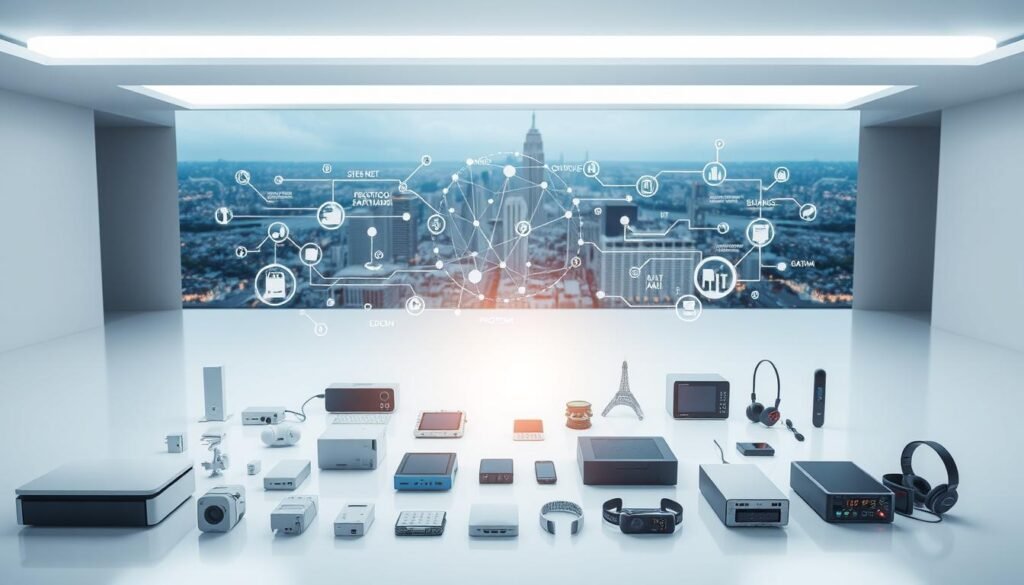
Wireless tech like WIFI, Bluetooth, and Cellular is big in IoT. WIFI is great for fast data, while Bluetooth is good for short, low-power uses. Cellular networks, like 4G and 5G, cover wide areas and move data quickly.
Selecting the Right Protocol for Your Application
Choosing a wireless protocol depends on what you need. For example, Bluetooth Low Energy (BLE) is perfect for saving power. But WIFI is better for lots of data.
Power Consumption Considerations
How much power a device uses is very important. Bluetooth Low Energy and Low-Power WIFI use less power. This means devices can run longer on one battery.
Low-Power Wide-Area Networks (LPWAN)
LPWAN is for IoT needs that want to save power and reach far. It’s great for smart meters, smart farming, and tracking things.
LoRaWAN and Sigfox
LoRaWAN and Sigfox are big in LPWAN. has a strong network for lots of devices. Sigfox uses ultra-narrowband tech for low-power, low-data apps.
NB-IoT and LTE-M
NB-IoT and LTE-M are cellular LPWAN options.good for low data and long battery life. LTE-M supports more data and is better for moving things and voice calls.
The Convergence of IoT with Emerging Technologies
IoT is growing fast, and it’s getting better with AI and blockchain. This mix is changing many industries. It makes IoT more powerful and opens up new ways to innovate and work better.
AI-Powered IoT Applications
AI and IoT together create smart systems. These systems can understand data, decide, and act on their own. AI-powered IoT is now used in many areas.
Natural Language Processing for IoT Interfaces
NLP makes IoT easier to use. Now, you can talk to devices or type commands. This makes using IoT more fun and easy for everyone.
Computer Vision in IoT Systems
Computer vision lets IoT devices see and understand pictures. It’s great for watching over places and checking product quality.
Blockchain for IoT Security and Trust
Blockchain helps make IoT safer and more trustworthy. It’s like a secure book that keeps records safe and unchanged. This helps protect IoT from threats.
Decentralized Device Management
Blockchain lets IoT devices work without needing a central boss. This makes IoT networks stronger and less dependent on one place.
Smart Contracts for IoT Transactions
Smart contracts are like digital agreements that do things on their own. They make IoT deals and talks easier and faster, without needing middlemen.
IoT, AI, and blockchain together are bringing new chances and smarter IoT solutions. As these techs grow, we’ll see even more cool uses and ideas.
Overcoming Implementation Barriers
IoT implementation faces many challenges. These include technical issues, resistance from within the organization, and the cost. To successfully integrate IoT solutions, these barriers must be overcome.
Technical Challenges
Technical hurdles are a big obstacle in IoT implementation. These include problems with how different devices and systems work together.
Interoperability Issues
Different devices and systems often don’t work well together. This makes it hard to create a smooth IoT system. Standardization is crucial to solve these problems.
Legacy System Integration
Adding IoT solutions to old systems can be tricky and expensive. Companies need to check if their current systems can work with new IoT tech.
Organizational Resistance
Resistance from within the organization is another big challenge. This can be tackled with good change management and by finding champions for IoT adoption.
Change Management Strategies
Change management helps by explaining the benefits of IoT and providing training. This reduces resistance.
Building Internal Champions
Having champions inside the company makes the transition to IoT easier.
Cost Considerations
Cost is a key factor in IoT implementation. Companies must think about the upfront costs and the ongoing expenses for maintenance and support.
Initial Investment Requirements
The cost of starting up IoT, including hardware and software, is high. Companies need to plan their spending carefully.
Ongoing Maintenance and Support
Keeping IoT systems running requires ongoing care. This includes updating software, keeping data safe, and ensuring the system’s integrity.
Future Trends in the Internet of Things
The Internet of Things (IoT) is changing fast. New technologies are leading the way. These changes are making IoT more advanced and exciting.
Emerging Technologies
Several new technologies are changing IoT. Two big ones are 5G and beyond and quantum computing.
5G and Beyond
5G networks will change IoT a lot. They will make data transfer faster, reduce delays, and connect more devices. This will help IoT grow in many industries.
Quantum Computing Impact
Quantum computing will also change IoT a lot. It will make processing data faster and more secure. This will help with complex tasks and keep data safe.
Industry Predictions
Experts have many predictions for IoT’s future. These predictions cover both short-term and long-term changes.
Short-term Developments
In the short term, IoT will grow in many areas. This growth will come from better connectivity and data analysis.
Long-term Transformation
In the long term, IoT will change a lot. It will create smarter, more connected systems. These systems will lead to new ideas and better efficiency.
Potential Disruptors
New players and technologies are also changing IoT. These disruptors are bringing fresh ideas and challenges to the market.
New Market Entrants
New companies are joining the IoT market. They bring new solutions and ideas. This is shaking up the traditional players.
Technological Breakthroughs
Advances in AI, blockchain, and quantum computing are opening new doors for IoT. These breakthroughs are making IoT solutions more advanced and secure.
Case Studies: Successful IoT Implementations
IoT technology is changing many sectors for the better. This section looks at how IoT has helped in manufacturing, healthcare, and retail. We’ll see the challenges, solutions, and results.
Manufacturing Sector Example
A top manufacturer used IoT sensors to keep an eye on equipment. This helped predict when maintenance was needed, cutting down on downtime.
Problem Statement and Solution
The manufacturer often faced equipment failures, causing a lot of downtime. They installed IoT sensors to track temperature, vibration, and more. This led to predictive maintenance.
Results and Lessons Learned
The move cut maintenance costs by 30% and unplanned downtime by 25%. The manufacturer learned the power of data-driven decision-making and real-time monitoring.
Healthcare Innovation
A healthcare provider used IoT to keep an eye on patients with chronic conditions. This improved patient care and lowered hospital readmissions.
Implementation Challenges
The provider had to link IoT devices with existing EHRs. They also had to protect data security and patient privacy.
Patient Outcome Improvements
The IoT solution cut hospital readmissions by 20% and boosted patient satisfaction. Patients loved the convenience of remote monitoring and timely help.
Retail Transformation
A retail chain used IoT-enabled smart shelves to track inventory. This improved customer experience and made operations more efficient.
Customer Experience Enhancement
Smart shelves made sure products were always in stock. This reduced stockouts and boosted customer happiness.
Operational Efficiency Gains
The retail chain saw a 15% drop in inventory costs. They also improved supply chain efficiency with real-time tracking and automated restocking.
Conclusion: Embracing the IoT Revolution
The Internet of Things is changing how businesses work. It opens up new chances for growth, better efficiency, and innovation. This article has shown that IoT is not just a tech update. It’s a big change that’s making new rules in many fields.
To join the IoT revolution, you need to really get it and plan well. Using IoT tech, companies can find new ways to make money, work better, and make customers happier. As IoT keeps getting better, it’s key for businesses to keep up and use new trends and tech.
The future of IoT looks bright, with AI, blockchain, and 5G making it even more powerful. Looking ahead, IoT will be more important than ever in our connected world. By starting to use IoT now, companies can get ready for the fast-changing future.